The HomePage
Sign up for our e-newsletter and see your gifts in action –

Sign up for our e-newsletter and see your gifts in action –
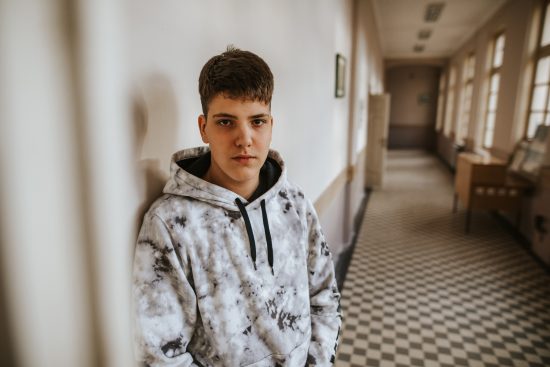
When John came to us, he was 14 years old and hadn’t been in a classroom for years. In fact, we searched and never found middle school records for him. Testing revealed he was working barely above an elementary grade level.
John was angry and discouraged when we met, and we understood. He was living unparented in a house without regular meals or clothes for school. He’d lost his mom when he was 4 and his father, remarried, was in and out of his life, serving time in prison or traveling to construction jobs.
We knew John needed a lot of help academically – but before that could happen, he needed to know somebody believed in him. That’s where Ms. Mary begins her work. She’s the full-time teacher in his group home, and she understands how kids like John are resigned to failure, afraid to try. “We all told him you can do this,” Mary says. “You can do this. Every day we said, we are going to make sure that you have food to eat, you have clothes to wear, you have a shower, you are going to school – and you are going to do what you need to do.”
Mary started by giving John work she knew he could handle. “When he realized he could do it, he got that success experience. He lost a little bit of his fear. Then he tried something else and moved up, building on that success and starting to believe in himself.”
John is in high school now, with plans to go to culinary school – and we are delighted to see him working toward a dream. It’s because of you that children like John are able to learn, love, and discover their God-given talents. Your compassion, prayer, and gifts give them hope.

You are the heart of what we do
– and these are the children who need our help
One boy was found walking alone 1½ miles from home. His parents were drug-addicted and violent – but his 6-year-old heart felt only guilt and grief when he was placed into foster care. Another boy was caught stealing. He’d effectively lost his family a decade earlier when his mother died in her sleep. His father was absent – and this 14-year-old felt “thrown away” when he was delivered to our crisis & assessment center.
Most days, that is how kids come to us, feeling unlovable and incapable. What they need are people who care. That is who we are – Methodist Home for Children and you.
For the young boy, care meant an adoptive family embraced him and understood that, while past trauma may still hurt him, it will not define him. He is theirs. For the teenager, care meant somebody made him meals and expected him to be in his classroom seat every day. It meant somebody from our crisis center drove 260 miles round-trip to check on him when he moved to one of our group homes – an expression of love he had not known in years.
And so it happens, day in and day out, that we care specifically and individually for the children who come to us, knowing that each one wants to be loved and accepted. No matter what age, race, or gender, they all want someone to believe in them, to praise them, to cheer them on, and to set safe limits.
Together we do this, in service to God, so that children can grow up safe and secure.
Thank you for being the heart of what we do. We wish you peace and happiness in the New Year.
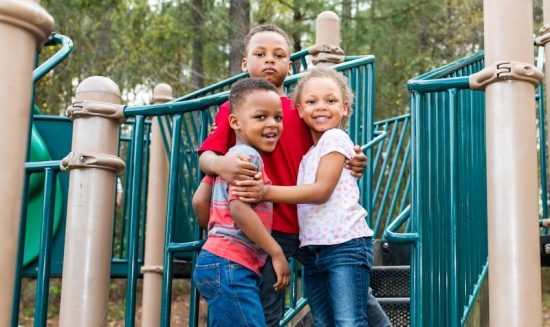
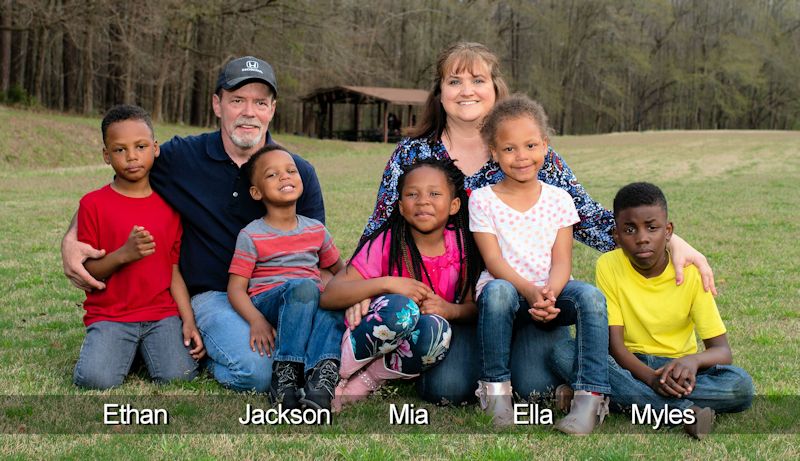
ETHAN, AGE 6
ELLA, AGE 5
JACKSON, AGE 4
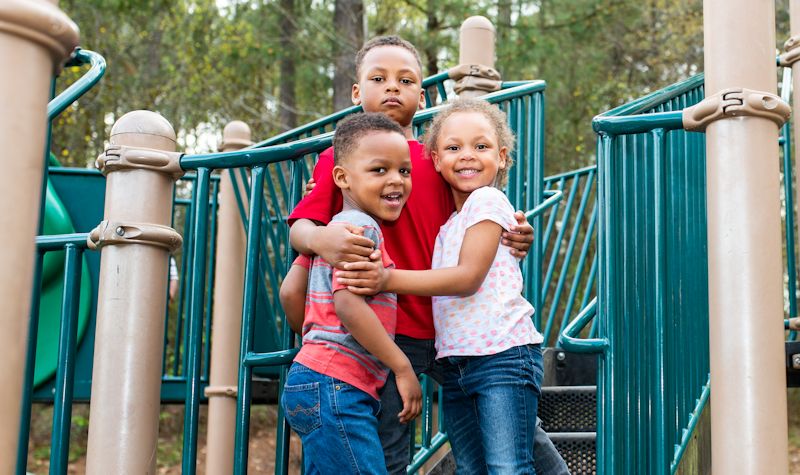
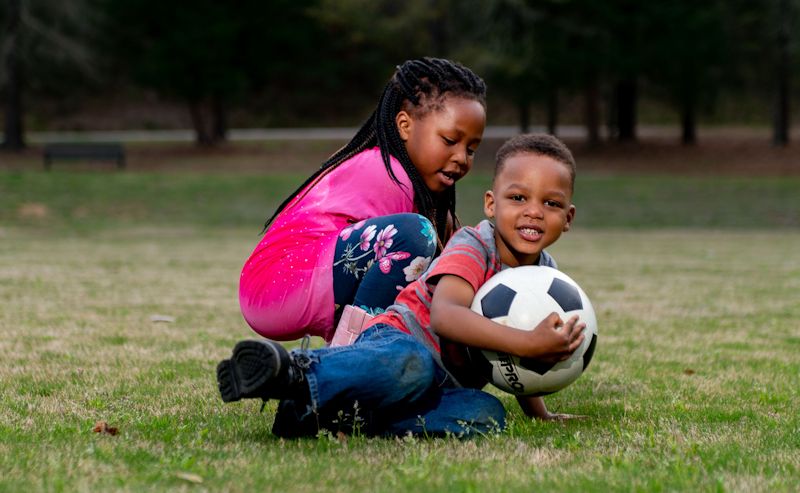
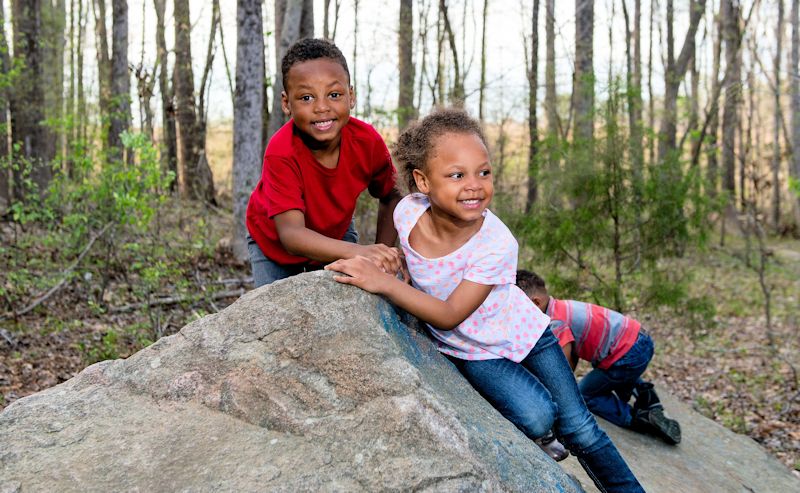
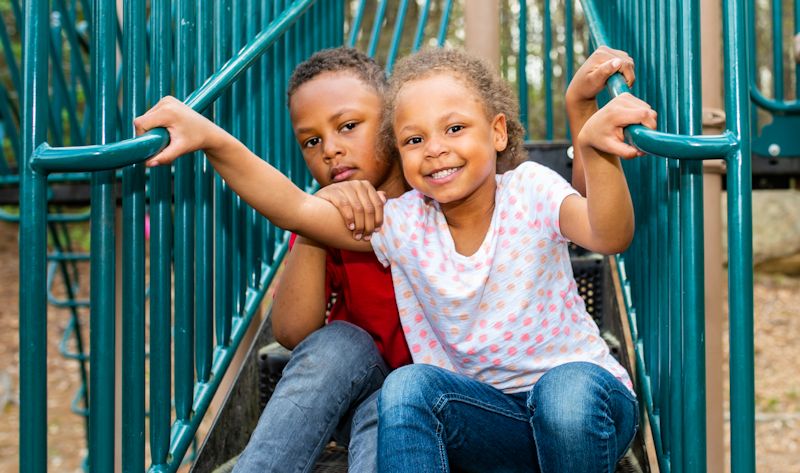
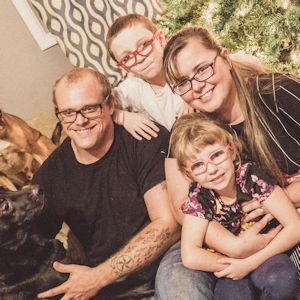
In the spring, we told you how Tabitha and David adopted their first two children – a brother-sister pair, then 8-year-old Myles and 6-year-old Mia. Now we can introduce the rest of the family – siblings Ethan, Ella, and Jackson.
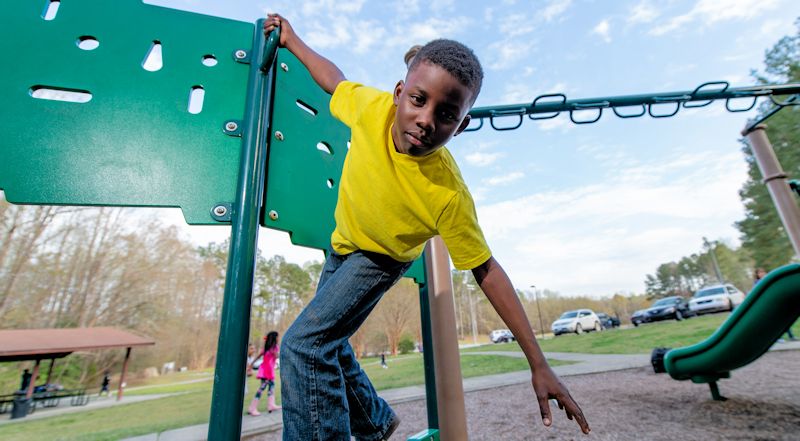
All five children love trips to the zoo and video games on the weekends. Ethan has the big imagination and likes to tell stories; Jackson has the appetite, always thinking about his next meal. Mia is the chatty one – and Ella is her spunky sidekick. Myles is the quiet one with the sharpest memories of life before foster care.
There were some “oil and water” months integrating two sibling groups under one roof, Tabitha says, “but now they’re all part of the family.”
DANIEL, AGE 8
HAZEL, AGE 5
Lindsay and Robbie arrived a few minutes early. They were understandably nervous and – this is important – they wanted to be the first to arrive. They claimed a spot in the lobby and watched the door. Every time a family with two children came in they wondered: Is that them? Are these the ones?
Lindsay and Robbie were at Marbles Museum in Raleigh; they were waiting to meet two foster children who had just become eligible for adoption. They hadn’t seen a picture of the kids and were unsure of their ages. “All we knew,” Lindsay says, “is that it would be a boy and a girl. We honestly didn’t know if they were white or black – we didn’t care about that sort of stuff, so we never asked.”
And then Daniel and Hazel walked in with their foster parents – and Lindsay and Robbie say they just knew. “I started tearing up,” says Lindsay. “I said, ‘That’s them and I already love them.’ ” Robbie said the same thing and together they walked over to introduce themselves.
Fast forward two years.
Now they are a close-knit family of four people and three dogs. Daniel’s in second grade, Hazel just started kindergarten. And even though their lives are full with school, camp, and family outings, they all dream of one day living on a farm. Deep cords of love – present before they met – hold them together. The only dissent came on adoption day.
As papers were signed and the seal put in place, the judge asked Hazel if everything looked right. Her answer was quick and clear: No.
Pointing to her new last name and she said, “This is all wrong. My name should be Unicorn Princess. Hazel Unicorn Princess.”
God bless the child.

The 2½-year-old girl survived a car crash that killed her little brother and sent her mother to prison for 10 years. Her father left town after that.
Life wasn’t stable before the accident – her parents had addictions and housing problems – but it was all Julia knew and loved, and it was one in one day. Family preservation specialist Sarah Braswell was called in to help her grandparents prepare to adopt.
“By this time, Julia was in kindergarten and her grandparents desperately wanted to raise her and keep her safe, but they were having trouble setting boundaries. She’d been through such a horrible, tragic experience and they didn’t want to say ‘no’ to her. They just lavished her. And while that may sound like an ideal way to live – like a fantasy – in reality children need stability, and stability requires structure and boundaries. The grandparents needed to be able to say, ‘We love you, but you’re the child and we’re the grownups. We’ll guide you in the correct direction.’
“So I worked with them to teach some basic parenting skills, like how to discipline and offer choices, and they were able to adopt Julia in August. This case really touched me because I stayed with my grandparents when I was her age. My situation was different – my sister was battling cancer, so my mom was at the hospital and my dad was working to pay the bills – but Grandma and Grandpa were my surrogate parents. “To be able to help these grandparents learn how to love Julia appropriately and create a relationship they can maintain through her life – that was a blessing.”
WHAT IS FAMILY PRESERVATION? One-on-one coaching for families to prevent or minimize foster care placements of their children

When he was 15 Quinn was a smart, well-liked 10th grader – active in his school’s athletics and clubs. That changed in an instant when he did something irrational and impulsive. No amount of regret could undo it and Quinn ended up in court.
A week later, Quinn was sent to one of our crisis & assessment centers and 30 days after that, he was accepted into our transitional living program. And this is where Quinn’s story turns.
Cast off by his parents, Quinn took control of his life. He accepted responsibility for what he did, made amends as best he could, and decided to move forward.
Now, barely 17, Quinn has graduated from high school and started college. He works full time at a restaurant, but he’s struggling. When he realized how difficult it would be to work, make ends meet, and succeed in college, he enlisted in the Army. There he plans to continue his education and train for a career in cyber security.
Everyone has a back story, everyone makes mistakes. But Quinn has learned he can rise above his worst moment and create a life worth living – and worth sharing.
A residential program that prepares court-involved teens for their transition into adulthood by teaching them to live independently
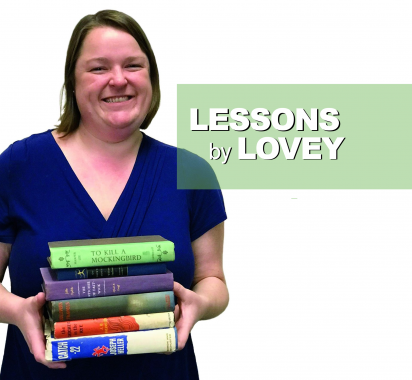
Imagine for a moment that you are the teacher at one of our multipurpose homes. The kids who live here are between the ages of 10 and 17 and they all have multiple juvenile offenses. As the teacher, you know they need academic help – but they also need life help. Many of them are in trouble because they’ve never been shown a life worth living. So, what do you do?
If you’re Lovey Steinert, you show them compassion and you show them a life beyond their back door. You introduce them to books and theater – even when they grumble about it – because there’s something magical about seeing a story come to life on the stage, and it often takes them by surprise.
“Some of them get really, really into it,” Lovey says. “One boy in class was reading the part of Jonathan in Arsenic and Old Lace with this deep, intense voice. He was better than the actor we saw in the play.”
Lovey knew early in her teaching career that she wanted to work with these kids – the ones with the “problem” label. She could see the insecurity in their behaviors and she knew the ways childhood had hurt them. Something in them reminds her of herself as a kid growing up without her own mother, an only child slamming doors, blasting her radio, and escaping into books.
But she had an advantage – a father who gave her stability and love – and some of our kids don’t get that at home.
“We just read the quote from To Kill a Mockingbird, when Atticus says you don’t understand a person until you crawl into his skin. I guess that sums up why I do it,” Lovey says. “I put myself in the place of the kids and connect with them to be the support they need.”
WHAT IS A MULTIPURPOSE HOME? A group home for kids (ages 10-17) whose repeat offenses are leading them toward more serious involvement in the juvenile justice or adult corrections system
A Benevolent Table
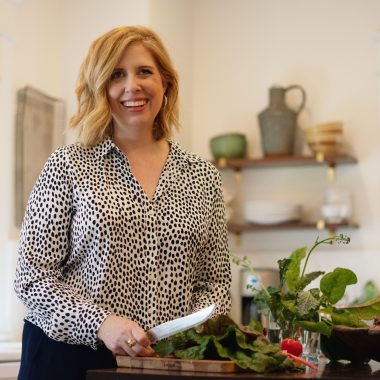
While others her age were kicking back with a Teen Beat or Sassy magazine, 13-year-old Jill Sergison was studying Martha Stewart Living and Miss Manners. Entertaining is in her DNA; cooking is her love language.
So it makes perfect sense that hospitality is her go-to for giving back.
Every few months, Jill opens her Durham home to paying guests for a cooking lesson, a shared meal, and an opportunity to do good. The dinner series is called A Benevolent Table, and it raises money for charities including Methodist Home for Children.
“A Benevolent Table is about coming together, learning how to make delicious food, having some drinks, making new friends, enjoying a delicious dinner,” Jill says. “But it’s also about using this bounty and community for good.”
The idea came to Jill after her husband, Peter, was diagnosed with stage IV non-Hodgkin lymphoma a couple of years ago. The news was devastating to their family of four – but the response from friends, and even people Jill didn’t know that well, was immediate and overwhelming.
Within hours, they loaded her countertops and refrigerator with meals that kept coming for months.
The love and care represented by all that food – shared with her family at its most vulnerable time – was an enormous comfort. And while sharing a meal with friends or strangers has always felt like an act of faith to her, A Benevolent Table has created a way for Jill to give thanks and give back by doing something she loves.
HAVE AN IDEA? Writing a check is great, but sometimes it’s more fun to give as a group or through a project you love. Talk to us at [email protected].