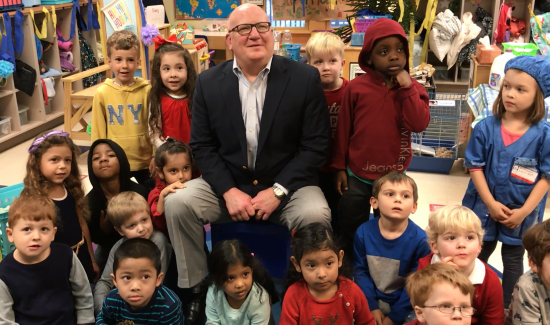
There’s no good time to be removed from your home as a child – and the holidays might be the worst. Children entering the foster care system because of abuse or neglect deserve a safe, stable place to live.
But that safe place is increasingly difficult to find amid a foster care crisis in North Carolina, where the number of licensed foster homes has dropped by more than 20% since 2021, according to data collected by Fostering Media Connections.
A new collaboration between Methodist Home for Children (MHC) and Community Care of North Carolina, Inc. (CCNC) aims to address this problem.
“In addition to working with foster families on health issues, CCNC is helping to support MHC financially, and we encourage other organizations and individuals to join us in donating to this worthy cause,” says CCNC CEO and President Tom Wroth, MD, MPH.
We cannot overstate the need for families with the heart to parent children in the foster care system, says MHC President / CEO Rev. Bruce E. Stanley, MDiv. “The recruitment of foster families is just the beginning,” Stanley says. “Our parents need training and round-the-clock support in order to care for children who have experienced deep trauma and loss. This requires time and resources.
“The timing of this support is absolutely critical. We are grateful to CCNC for walking alongside us in this important work. ”
MHC will direct the new resources toward recruiting and training foster families, with the goal of increasing the availability of licensed foster homes by 25 percent in the next year.
The alignment of missions made sense for collaboration with MHC, Dr. Wroth says. “CCNC has been working with children in foster care for many years and we understand the special needs of children and youth in foster care. They often have fragmented healthcare prior to entering foster care. This, in addition to placement changes and lack of cohesion between systems, can lead to inadequate connection to a primary care provider and comprehensive care.
“Our statewide care management model allows us to address immediate medical, behavioral, and social needs through tight coordination with primary care providers and Departments of Social Services regardless of where the child is placed, Wroth says. “Collaborating with private placing agencies like Methodist Home for Children can streamline efforts and ensure children and youth get the care and services they need.”
“The season of giving is a good time to consider foster parenting – or perhaps making a donation that will help to license new foster homes in the coming year,” says Christopher Woodfin, CCNC Chief Financial Officer. “In this holiday time, we encourage others in the community to consider donating to Methodist Home for Children as they serve a vulnerable group with many needs.”
If you would like to learn about becoming a foster parent, call 919.754.3647 or visit mhfc.org/foster to submit an interest form and register for the next information session on January 17, 2024.
About Methodist Home for Children
At Methodist Home for Children, we provide safe, stable homes where children can thrive and live to their full, God-given potential. While not always traditional, an MHC home is where child and family are equipped to succeed. We build on strengths, nurturing hopes and goals, and prepare all in our care to shape their own futures.
About CCNC
From the mountains to the coast, Community Care of North Carolina staff work with local primary care physicians and diverse teams of health professionals to develop whole-person plans of care that connect people to the right local resources. For more information, see communitycarenc.org. For information on CCNC’s Foster Care Services, visit this link.